Zillow and ChatGPT: How AI Is Redefining Real Estate Search in 2025

Zillow’s new ChatGPT integration is changing how people buy, sell, and market homes—faster than anyone expected.


In October 2025, Zillow became the first real estate platform fully integrated inside ChatGPT. This isn’t just another tech update—it’s a paradigm shift in how millions of buyers, sellers, and agents interact with listings and real estate data.

If you’re in the NYC market, this partnership between Zillow and OpenAI signals a new era where AI-powered conversations replace traditional home search filters, and listing descriptions carry algorithmic weight.

Here’s what this means for buyers, sellers, and agents—and why understanding this shift could make or break your next deal.


How Zillow and ChatGPT Actually Work Together

The Zillow-ChatGPT integration allows anyone to search for homes directly inside a ChatGPT conversation. Instead of using filters or separate apps, you can simply ask:

  • “Show me condos for sale near Central Park under $1.5 million.”
  • “Find three-bedroom apartments in the Upper West Side with outdoor space.”
  • “What’s available in Tribeca with natural light and chef’s kitchens?”

ChatGPT then pulls real Zillow listings—with photos, pricing, and maps—right into the chat. You can schedule showings, connect with an agent, or view 3D tours on Zillow without ever leaving the conversation.

What makes this different from a plugin?
This is a native integration, built using OpenAI’s Apps SDK, meaning it’s part of ChatGPT itself. The AI interprets natural language and intent, not just keywords.

Pull Quote: “AI-powered search doesn’t replace filters—it understands what you actually mean when you describe your dream home.”

Currently, the integration covers all U.S. listings, including NYC rentals and homes for sale, with future plans to include new construction and 3D tours.

This isn’t just convenience—it’s a glimpse into the AI-first future of home discovery.


For Sellers: Is Your Listing Optimized for AI?

If you’re selling a home in 2025, the first question you should ask is:
“Can ChatGPT understand my listing?”

Why Listing Descriptions Are Now SEO for AI

ChatGPT doesn’t read your photos—it reads your listing description. Every word now impacts how your property surfaces in AI-powered searches.

Compare the difference:

  • A vague description like “renovated kitchen” might never surface.
  • A rich description like “chef’s kitchen with marble counters, stainless steel appliances, and custom cabinetry” tells the AI exactly what to match.

Proximity language matters too. Mentioning neighborhood landmarkstransit linesparks, or schools helps your home appear in conversational, hyper-local searches—especially relevant in NYC neighborhoods like SoHo, the Upper East Side, and Chelsea.

Pull Quote: “In the age of AI, your listing description is your listing’s SEO strategy.”

The Marketing Advantage

This integration gives sellers exposure to millions of ChatGPT users—a completely new audience segment. Agents who understand how to write AI-optimized descriptions gain a measurable edge.

Working with an agent who knows how to write for both buyers and bots is now part of an effective marketing strategy.
 Learn how The Garson Team optimizes listings for maximum visibility.


For Buyers: Real Estate Search Just Got Conversational

Searching for a home in NYC has always been complex. Now, AI is simplifying it—without losing personalization.

Intuitive, Conversational Search

Instead of fiddling with map filters, you can type in natural language requests like:

  • “Find a brownstone in Brooklyn with a backyard.”
  • “Show me condos in Midtown near good coffee shops.”

The AI understands context, not just filters. You can refine your results mid-conversation:
“Actually, show me options closer to the subway,” or “Add listings with a home office.”

Personalized Results

ChatGPT tailors recommendations based on your lifestyle clues. If you mention you work from home, love cooking, and want outdoor space, it prioritizes those features automatically—even if you never checked a box.

This makes the early search process feel more like talking to a knowledgeable agent than using an app.

Instant Access to Key Details

Every listing preview in ChatGPT includes price, location, photos, and links—no need to toggle between tabs. That convenience shortens the path from curiosity to viewing.

➡️ Explore our NYC Buyer’s Guide for 2025 here.


For Agents: Adapt or Get Left Behind

The Zillow-ChatGPT partnership is a wake-up call for the real estate industry.

Lead the AI Transition

Agents who learn to optimize listings for conversational AI will rise above the competition. That means:

  • Crafting detailed, keyword-rich property descriptions
  • Understanding how AI interprets search intent
  • Educating sellers about AI discoverability
  • Using ChatGPT tools to personalize buyer outreach

This is where marketing and machine learning intersect—and agents who master it will win listings faster.

Challenges to Watch

Data Compliance

Some MLS organizations are questioning whether Zillow can share broker-supplied data with OpenAI. These regulatory discussions could shape future integrations.

Bias and Fair Housing

AI models can unintentionally reflect bias. Zillow and OpenAI claim to monitor fairness, but agent oversight remains critical to ensure all listings are represented ethically and equitably.

Pull Quote: “The agents who understand AI compliance and consumer trust first will define the next decade of real estate.”


The Competitive Landscape

Zillow’s first-mover advantage has already set off an industry race.

  • Realtor.com is reportedly in talks with OpenAI.
  • Compass and Redfin are developing proprietary AI search tools.
  • Smaller brokerages are testing AI-driven chat experiences for listings.

Still, Zillow’s ChatGPT-native integration makes it the most visible real estate brand in AI right now—a key distinction that will likely shape user habits for years to come.


The Road Ahead: AI as the New Search Layer

If this integration succeeds, AI-driven real estate search could become the default experience by 2030.

Imagine being able to:

  • Describe your ideal NYC apartment and instantly get curated listings
  • Predict buyer interest before launching a listing
  • Use conversational AI to handle early client inquiries

These tools will make home discovery more personalized, efficient, and data-driven than ever before.


Conclusion: The Future Belongs to the Agents Who Adapt

The Zillow and ChatGPT partnership is more than a milestone—it’s a turning point.

For sellers, it’s a reminder that words sell homes.
For buyers, it’s a new, effortless way to discover listings.
For agents, it’s a call to evolve, fast.

If you’re buying or selling in Manhattan, working with an agent who understands both AI and NYC real estate isn’t optional—it’s essential.

Let’s talk about how to position your next move for success in the AI era.

— Ryan Garson
Founder, Very Social | The Garson Team | Manhattan Real Estate

A Bold Shift Downtown: The 50th Kips Bay Decorator Show House in Greenwich Village

A Bold Shift Downtown: The 50th Kips Bay Decorator Show House in Greenwich Village

This year, the storied Kips Bay Decorator Show House marks a bold milestone—its 50th anniversary—and for the first time ever in New York, it has moved downtown into a dramatic Greenwich Village mansion. What was once reserved for the Upper East Side now finds itself rooted in the heart of one of Manhattan’s most creative neighborhoods.

A Venue Steeped in History and Panache

The 2025 Show House is housed at 20 West 12th Street, a circa-1900 townhouse that offers 9,000 square feet over six levels. It retains original architectural charm—13-foot ceilings, seven wood-burning fireplaces, and even a working antique Otis elevator.

Beyond the interiors, the property includes eight bedrooms and nine bathrooms, a private garden to the rear, and a generous lot depth that gives the house a rare sense of breathing room in the Village.

Kips Bay has traditionally staged its show houses uptown, but in 2025, the decision to go downtown showcases a willingness to rethink tradition while embracing context.

Design Alchemy Under Pressure

What’s perhaps most awe-inspiring: 21 top designers were tasked with reimagining every corner in just eight weeks (some even less).

Among the standout rooms:

  • Corey Damen Jenkins crafted a “Through the Looking Glass” dining room—mirrors, whimsical detailing, and altered perspective. Architectural Digest+1
  • Alexa Hampton drew inspiration from Oscar de la Renta runway looks, delivering a glamorous, fashion-forward room. Yahoo Shopping+1
  • Christopher Peacock, renowned for couture cabinetry, unveiled his ninth Kips Bay kitchen: moody palettes, luxe brass finishes, and precision in every line. ELLE Decor+3Yahoo Shopping+3Homes and Gardens+3
  • Andrea Schumacher leaned into drama with a Moroccan-speakeasy concept dubbed the Pink Rhino Club, layering texture, darkness, and richness. Yahoo Shopping+2Homes and Gardens+2

Beyond those, designers like Ben Pentreath, Jamie Drake, Tamara Feldman, Leyden Lewis, and Eve Robinson contributed narratives rich in history, heritage, and fresh voices.

Even with curveballs—stop-work orders, tight supply chains, and spatial constraints—creativity triumphed.

What It Means for Design & Inspiration

For design enthusiasts, architects, or homeowners, the 50th Show House is more than spectacle—it’s a living anthology of where interiors are headed. You’ll see trend signals emerging:

  • Layered marble textures and mixed stone in bathrooms and kitchens
  • Sculptural lighting and statement fixtures
  • Hybrid spaces—think “Zoom room” integrations balancing style and function House Beautiful+2Homes and Gardens+2
  • Depth through color contrast and moody palettes tied to historic bones

Walking through this house is like traversing through a story: each room chapters in tone, texture, ambition.

Visit, Reflect, Create

The Show House is open September 30 through October 19, 2025. If you can, go see it in person—soak it in, take notes, let your imagination roam.

Interested in reworking your own space? Whether it’s a subtle pulse of drama or total reimagination, I’d love to walk that journey with you.

P.S. Want to peek inside? Here’s the official listing that gives you sense of scale, detail, and context:
20 West 12th Street Listing
And a nod to the listing agents who help bring architectural dreams to life.

Sixteen Fifth Avenue: Robert A.M. Stern’s New Luxury Condo Development in Greenwich Village

A Landmark Returns to Greenwich Village’s Gold Coast

Some New York City addresses go beyond real estate—they define it. Fifth Avenue between 8th and 9th Streets is one of those storied stretches, where elegance meets artistry, and history feels alive in every brick. Known for generations as the Gold Coast of Greenwich Village, this tree-lined block has long been synonymous with sophistication. And for more than half a century, no new residential building has risen here.

Until now.

A Once-in-a-Generation Development

Sixteen Fifth Avenue marks the first new development on this iconic stretch of the Village in over 50 years. Designed by Robert A.M. Stern Architects and developed by Madison Realty Capital, this 19-story condominium is a masterclass in architectural harmony—a building that pays tribute to its surroundings while ushering in a new era of refined urban living.

Set for completion in 2025, Sixteen Fifth Avenue represents more than just a new address. It’s a rare opportunity to own a home in one of Manhattan’s most protected and prestigious enclaves.


The Vision: Robert A.M. Stern’s Timeless Approach to Urban Design

Robert A.M. Stern is a name that carries weight in the world of architecture. His firm—known for creating contextual, classically inspired buildings—has left its mark on New York with celebrated developments like 15 Central Park West and 220 Central Park South. Stern’s work is rooted in respect for the city’s history while embracing the needs of modern life.

At Sixteen Fifth Avenue, Stern brings that same sensitivity to Greenwich Village. The façade, crafted from brick and limestone, echoes the prewar charm of the neighborhood. Chamfered corners soften the building’s street presence, while French balconies and landscaped terraces introduce light, texture, and greenery to the skyline.

This is a building that feels both new and familiar—timeless architecture that belongs to the Gold Coast.

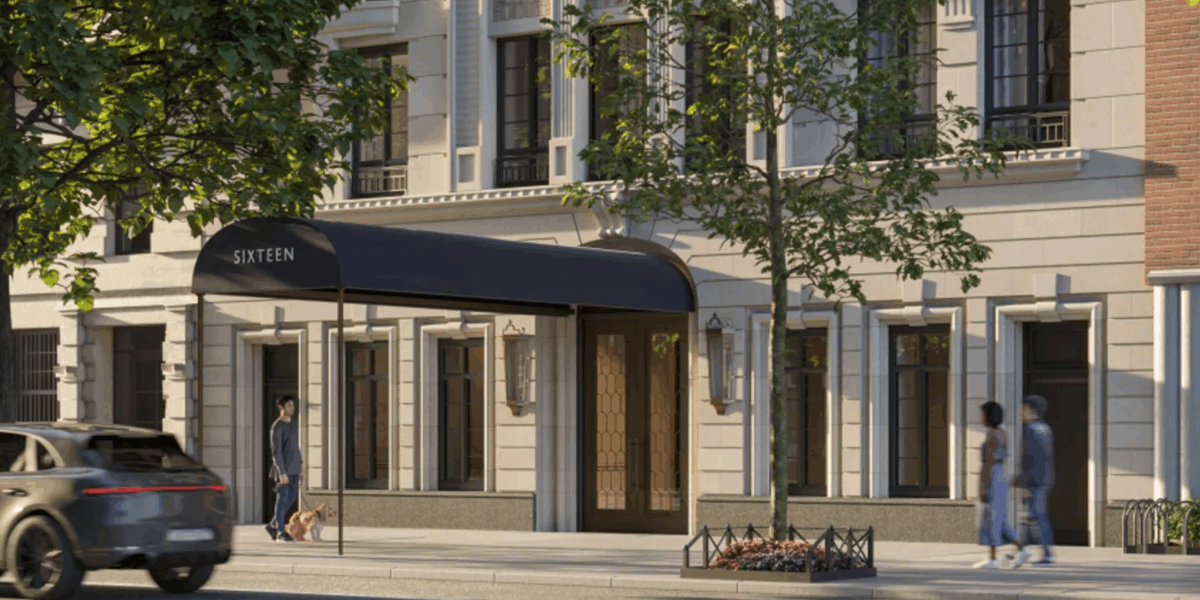
Image alt-text: Architectural rendering of Sixteen Fifth Avenue showing limestone and brick facade blending with Greenwich Village streetscape.


Exclusivity Redefined: Only Fourteen Residences

Privacy is at the heart of this development. With just fourteen residences across nineteen stories, Sixteen Fifth Avenue is a study in understated exclusivity.

  • Twelve full-floor residences
  • Two penthouses offering duplex and triplex layouts

Each home is accessed via a private elevator landing—no shared hallways, no noise, just pure serenity. The result is a level of intimacy rarely found in Manhattan real estate.

Image alt-text: Private elevator vestibule leading to full-floor residence at Sixteen Fifth Avenue.


Full-Floor Living in the Village

The full-floor homes average more than 3,700 square feet, designed for modern lifestyles that balance privacy and openness. Four bedrooms, four and a half bathrooms, and expansive entertaining areas create spaces that feel like classic Village brownstones—reimagined vertically.

Floor-to-ceiling windows flood each home with light and panoramic views, from the Washington Square Arch to the Empire State Building. With ceilings over 10 feet and flexible layouts, these homes combine grandeur and livability in equal measure.

Image alt-text: Interior rendering of a full-floor residence with floor-to-ceiling windows and view of Washington Square Park.


The Penthouses: Townhouses in the Sky

The crown jewels of Sixteen Fifth Avenue are its two penthouses, which redefine luxury living above the Village skyline.

  • Duplex Penthouse: ~6,800 sq ft of interior space
  • Triplex Penthouse: ~8,300 sq ft, with multiple private terraces

Each penthouse offers outdoor living areas, formal and casual entertaining spaces, and views that stretch across lower Manhattan. The sense of scale is extraordinary—these are not apartments but residences in the sky.

Image alt-text: Private terrace of the triplex penthouse overlooking downtown Manhattan skyline.


Craftsmanship and Design Details

Every element inside Sixteen Fifth Avenue has been chosen with purpose and precision.

Kitchens are designed by Christopher Peacock, featuring bespoke cabinetry, integrated appliances, and luxurious materials that blend form and function. Bathrooms are enveloped in marble from floor to ceiling, transforming daily routines into spa-like rituals.

This is craftsmanship you can feel—elegant, enduring, and unmistakably bespoke.

Image alt-text: Marble-clad primary bathroom with freestanding tub and city views at Sixteen Fifth Avenue.


Light, Views, and Connection to the City

Natural light defines the experience of living here. Every residence features floor-to-ceiling windows that open to sweeping city vistas. Morning light pours in from the east; evening sunsets paint the west-facing skyline.

The result is a home that feels deeply connected to its surroundings—a living, breathing reflection of New York itself.


Boutique Amenities for Modern Living

Sixteen Fifth Avenue’s amenities are curated with intention, offering the essentials of modern luxury without excess:

  • State-of-the-art fitness center
  • Golf simulator
  • Residents’ lounge
  • Private storage and bicycle room
  • Comprehensive mail and package services

Here, fewer residents mean more space, more privacy, and a more personal experience.

Image alt-text: Residents’ lounge with lounge seating, marble fireplace, and views of Greenwich Village.


The Gold Coast of Greenwich Village: A Storied Setting

Fifth Avenue between 8th and 9th Streets is among Manhattan’s most admired residential blocks. Its proximity to Washington Square ParkNew York University, and the Jefferson Market Library makes it both culturally rich and quintessentially New York.

Greenwich Village remains one of the city’s most desirable neighborhoods—an enclave where prewar architecture meets creative energy. Cafés, galleries, and historic townhouses line its streets, offering an urban lifestyle defined by authenticity.

To build here is to contribute to a legacy—and Sixteen Fifth Avenue does so with integrity and restraint.

Image alt-text: Tree-lined Fifth Avenue between 8th and 9th Streets in Greenwich Village, with historic prewar facades.


Architectural Integrity and Community Heritage

Replacing two former five-story apartment buildings, Sixteen Fifth Avenue underwent rigorous review from preservation boards before construction began. The project’s approval stands as a testament to its thoughtful design and sensitivity to its context.

Madison Realty Capital and Robert A.M. Stern Architects understood that this development wasn’t just about creating luxury—it was about contributing to the architectural heritage of one of New York’s most beloved neighborhoods.


Pricing and Availability

As of October 2025, select residences at Sixteen Fifth Avenue are available for purchase. For example, Residence #6 — a full-floor, four-bedroom, four-and-a-half-bath condominium spanning nearly 3,730 square feet — is listed at $13,500,000.

Most listings are handled privately, reflecting the building’s emphasis on discretion and exclusivity.

Image alt-text: Exterior rendering of Sixteen Fifth Avenue viewed from Washington Square Park.


More Than Real Estate—A Continuation of Legacy

Sixteen Fifth Avenue isn’t simply a new condominium; it’s a continuation of Greenwich Village’s architectural lineage. It’s where craftsmanship meets context, and where history and modernity coexist seamlessly.

For fourteen fortunate residents, it offers the chance to live not just in a home, but in a story—one that began over a century ago and continues to evolve in the heart of Manhattan.


FAQs About Sixteen Fifth Avenue

Q: Who designed Sixteen Fifth Avenue?
A: The building was designed by Robert A.M. Stern Architects, one of the most respected architecture firms in the world, known for projects like 15 Central Park West and 220 Central Park South.

Q: How many residences are in the building?
A: Sixteen Fifth Avenue includes just fourteen residences in total—twelve full-floor homes and two penthouses.

Q: When will construction be completed?
A: Completion is scheduled for 2025.

Q: What makes this development unique in Greenwich Village?
A: It’s the first new residential building constructed on the Gold Coast of the Village in over fifty years, blending modern design with classical context.

Q: What is the price range?
A: As of late 2025, residences start around $13.5 million, with penthouses priced higher based on size and features.

Manhattan’s Waterfront Gets a Hollywood Makeover: What Sunset Pier 94 Means for 1 West End & Waterline Square Residents

A New Era for Manhattan’s Waterfront

Manhattan’s West Side is stepping into the spotlight. The Hudson River waterfront is about to welcome Sunset Pier 94 Studios — a $350 million, state-of-the-art film and television production campus that brings Hollywood-grade infrastructure right to Midtown West.

For residents living at 1 West End and Waterline Square, this transformation is more than just a headline — it’s a game-changing development that could enhance the neighborhood’s lifestyle, amenities, and property values.


Inside the $350 Million Sunset Pier 94 Project

Spanning 266,000 square feet along the Hudson River, Sunset Pier 94 is a collaboration between Vornado Realty Trust, Hudson Pacific Properties, Blackstone, and the NYC Economic Development Corporation.

The campus will feature:

  • Six soundstages (up to 20,000 sq. ft each) with 36-foot ceilings
  • 145,000 sq. ft of production support and office space
  • LEED Gold and Fitwel certifications for sustainability
  • 100% renewable energy operations

Construction is expected to finish by late 2025, with productions set to begin in early 2026.

This will be Manhattan’s first purpose-built film and television studio campus, signaling a bold move to keep New York competitive with Hollywood, Atlanta, and New Jersey’s growing studio scene.


The Economic Impact: Billions in Activity and New Jobs

Sunset Pier 94 isn’t just a cultural win — it’s an economic engine.

  • 1,300 construction jobs and 400 permanent positions are expected
  • The project could generate $6.4 billion in economic activity over 30 years
  • Local restaurants, hotels, and retailers will benefit from increased production traffic

By anchoring a new creative hub on the Hudson, this project strengthens Manhattan’s position as a global media capital — and brings steady economic activity to nearby neighborhoods like Hell’s Kitchen, the Upper West Side, and Riverside South.


What This Means for 1 West End and Waterline Square Residents

For those living at 1 West End Avenue or Waterline Square, the Pier 94 redevelopment is happening just a short walk north. This proximity could bring a number of tangible benefits — and a few challenges — to the community.

1. Increased Desirability and Property Values

As the West Side evolves into a creative and entertainment district, nearby residences gain prestige. Luxury buildings like 1 West End and Waterline Square are likely to see:

  • Higher demand from media professionals and executives
  • Increased rental rates and resale value over time
  • Improved neighborhood perception, attracting new investment

2. Enhanced Public Spaces and Accessibility

The plan includes:

  • 25,000 sq. ft of new waterfront parkland
  • Improved bike lanes and pedestrian access to Hudson River Park
  • An 1,850-sq. ft community center for public use

These upgrades will directly benefit local residents who enjoy walking, jogging, or biking along the Hudson — making the stretch between Waterline Square and Clinton Cove Park more connected and enjoyable.

3. Local Business Growth

Expect a boom in nearby restaurants, cafes, and retail experiences. The influx of production crews and creative professionals will drive daytime and evening activity, potentially leading to new openings around West 59th–60th Street and 12th Avenue — just steps from your front door.

4. Possible Growing Pains

Like any major development, there may be short-term construction noise and traffic increases. However, the long-term payoff — from improved waterfront amenities to stronger local commerce — is expected to far outweigh these inconveniences.


A Catalyst for Community and Career Opportunities

One of the most promising aspects of Sunset Pier 94 is its workforce development initiative. The project includes paid training programs and local hiring efforts to create pathways for New Yorkers interested in TV, film, and digital media production.

With $700 million in annual state tax credits supporting film production, this effort will help nurture homegrown talent — and could even provide career opportunities for residents living right here on the Upper West Side.


How Sunset Pier 94 Reinforces Manhattan’s Global Appeal

For years, film and television production in New York was limited by a lack of modern space. Sunset Pier 94 changes that. Its location — right on the Hudson, minutes from Midtown and the Upper West Side — offers productions the best of both worlds: proximity to Manhattan’s creative heart and the convenience of purpose-built facilities.

This will not only draw productions back from New Jersey and Brooklyn but also reaffirm Manhattan’s position as the cultural core of the East Coast entertainment industry.


The Bottom Line

Sunset Pier 94 Studios represents more than a $350 million development — it’s a transformative project for Manhattan’s waterfront, blending entertainment, community, and economic revitalization.

For those of us who call 1 West End or Waterline Square home, the transformation brings exciting new energy to our backyard. From enhanced waterfront parks to increased property values, the West Side is poised for a dynamic new chapter.


FAQs About Sunset Pier 94 and Its Impact

Q: When will Sunset Pier 94 Studios open?
A: Construction is expected to be completed by late 2025, with productions beginning in early 2026.

Q: How will Sunset Pier 94 affect real estate near 1 West End and Waterline Square?
A: As the area attracts more creative professionals and gains new amenities, property values and rental demand are likely to rise over time.

Q: Will there be new public spaces or parks?
A: Yes, the project includes 25,000 square feet of new parkland, upgraded restrooms, and improved bike and pedestrian paths connecting to Hudson River Park.

Q: Are there job opportunities tied to the project?
A: Absolutely. The studio will create over 400 permanent jobs and several paid training programs for locals seeking careers in media production.

Q: How far is Sunset Pier 94 from 1 West End and Waterline Square?
A: It’s about a 10-minute walk north along the Hudson River — close enough for residents to enjoy the benefits without the daily construction disruptions.

How Your Credit Score Impacts Your Mortgage Rate in 2025

Buying a home in Manhattan isn’t just about finding the right apartment or townhome—it’s also about securing the best possible financing. One of the biggest factors in what you’ll pay over the life of your mortgage is your credit score.

The difference between an excellent score and an average one can add up to tens of thousands of dollars in interest, directly impacting your monthly payments and your long-term wealth. If you’re preparing to buy in 2025, here’s what you need to know.


What Do Mortgage Lenders Look For in a Credit Score?

Your credit score isn’t just a number—it’s a snapshot of your financial reliability. Lenders use score “tiers” to determine which interest rates and loan products you qualify for. Moving up even one tier can save you hundreds each month.

Here’s how the tiers break down:

  • 760–850: Best available rates (top tier)
  • 700–759: Very competitive rates
  • 680–699: Slightly higher rates
  • 660–679: Noticeably higher rates
  • 640–659: Expensive rates, limited options
  • 620–639: Highest rates for conventional loans
  • Below 620: May qualify only for FHA or specialized loan programs

How Much Does Credit Score Really Cost You?

Let’s put this into perspective with real 2025 numbers. For a $402,873 30-year fixed mortgage:

  • 760–850 credit score: ~7.242% APR
    • Payment: $2,746/month
    • Total interest: $585,730 over 30 years
  • 700–759 credit score: ~7.449% APR
    • Adds $57/month
    • Adds $20,000+ in lifetime interest
  • 620–639 credit score: ~7.838% APR
    • Payment: $2,911/month
    • Adds $165/month compared to top tier
    • Adds $59,300+ in lifetime interest

📌 Takeaway: Just 40–50 points on your credit score can be the difference between keeping or losing $50,000 over the life of your mortgage.


Why Credit Scores Matter So Much

Lenders use credit scores as a risk calculator. Higher scores mean you’ve demonstrated financial responsibility—paying bills on time, managing debt wisely, and keeping credit balances low. Lower scores raise red flags, and lenders compensate with higher rates.

This isn’t just about numbers—it’s about trust and risk. When a lender trusts you more, you pay less.


How to Lower Your Mortgage Rate Beyond Credit Score

Credit score is crucial, but it’s not the only lever you can pull. In Manhattan’s competitive market, two strategies can also make a big difference:

1. Down Payment Size

  • 20% down eliminates PMI (private mortgage insurance).
  • It can also reduce your interest rate by 0.5% to 1%.

👉 Example: With excellent credit, 3% down might get you 7.24%, but 20% down could drop that to 6.75%.

2. Discount Points

  • One point (1% of the loan amount) typically reduces your rate by 0.25%.
  • Best for buyers planning to stay in their home long term.

📊 On a $400,000 loan:

  • 760+ credit, 3% down, no points → 7.24% rate
  • 760+ credit, 3% down, 1 point → 6.99% rate
  • 760+ credit, 20% down, no points → 6.75% rate
  • 760+ credit, 20% down, 1 point → 6.50% rate

Even buyers with lower scores can leverage down payments and points for meaningful savings.


Smart Moves Before You Apply

If you’re aiming for a Manhattan condo, co-op, or townhouse in 2025, here are the most impactful steps you can take:

  • Boost your credit score: Pay down revolving debt, make on-time payments, and avoid new credit inquiries.
  • Save aggressively for a down payment: Getting as close to 20% as possible will pay off.
  • Know your timeline: If you’ll stay long term, buying points makes sense; if not, keep your cash liquid.
  • Run the numbers: Mortgage calculators (or a conversation with your lender) will show your break-even point.

The Bottom Line

Your credit score doesn’t just shape your mortgage rate—it shapes your financial future. In a market as competitive (and expensive) as Manhattan, improving your score could save you the equivalent of a year’s worth of maintenance fees, renovations, or even a second investment property.

💡 Pro Tip: Think of credit improvement as a high-return investment. Adding just 30–50 points could mean tens of thousands in savings—money you keep instead of giving to the bank.


FAQs: Credit Scores & NYC Mortgages

Q: What credit score do I need to buy a condo in Manhattan?
A: Most conventional lenders require a minimum of 620, but to qualify for competitive rates you’ll want 700+.

Q: Can I get approved with bad credit?
A: Yes. FHA loans and other programs exist, but expect higher rates and stricter terms.

Q: How much does PMI cost in NYC?
A: Typically 0.5%–1% of your loan amount annually if you put less than 20% down.

Q: Should I wait to buy until my credit improves?
A: If you’re close to the next tier, waiting may save you thousands. But in NYC’s fast-moving market, weigh potential savings against rising home prices.

Q: Do NYC co-ops care about credit score?
A: Yes—many co-op boards scrutinize financials even more closely than lenders. A stronger credit profile gives you an edge in board approvals.


✦ Thinking about buying in Manhattan? Your mortgage strategy matters as much as the property you choose. Contact Ryan Garson today to get personalized guidance on financing, credit improvement, and finding the right home in NYC.

How Government Shutdowns Impact the Real Estate Market (NYC Edition)

When the federal government shuts down, the effects reach far beyond Washington, DC. For homebuyers, sellers, and investors in Manhattan and across New York City, political gridlock can cause unexpected hurdles—and sometimes even create opportunities.

Whether you’re navigating a condo purchase in Midtown, listing a co-op on the Upper East Side, or analyzing an investment property in Brooklyn, understanding how a government shutdown affects the real estate market will help you move forward with clarity and confidence.


Immediate Impacts on Homebuyers

Mortgage Processing Slows Down

If you’re financing a purchase with an FHA, VA, or USDA loan, expect delays. These government-backed programs often halt or slow during a shutdown when federal employees are furloughed.

Even conventional loans (through Fannie Mae or Freddie Mac) can be delayed if federal verification processes—such as confirming employment or processing IRS transcripts—are unavailable. In a fast-paced market like Manhattan, that extra time can mean losing out on a property.

Flood Insurance Roadblocks

The National Flood Insurance Program (NFIP) is another major sticking point. During a shutdown, new policies can’t be issued and existing ones can’t be renewed.

Nationally, this delays 1,300–1,400 transactions daily. In NYC, where many waterfront properties in Lower Manhattan, Brooklyn, and Queens require flood coverage, this can stall closings indefinitely until the government reopens.


How Market Dynamics Shift

Mortgage Rates: A Temporary Silver Lining?

Paradoxically, shutdowns sometimes push mortgage rates slightly lower. Investors often move money into U.S. Treasury bonds during uncertainty, reducing yields and nudging mortgage rates down.

For NYC buyers, this can present a window of opportunity to lock in more favorable terms. But beware: prolonged shutdowns create volatility, making it harder to secure predictable financing.

Buyer & Seller Confidence Drops

Uncertainty hits consumer confidence hard—especially in areas with large federal workforces. While DC feels the sharpest impact, NYC isn’t immune. Federal contractors, Wall Street firms reliant on government reporting, and even tourism-driven businesses can all feel the pinch.

As confidence dips:

  • Buyers hesitate to commit to big purchases.
  • Sellers may hold back listings, fearing a slowdown.
  • Active buyers gain leverage, especially in negotiations.

Regional & Sector Variations

NYC vs. Other Markets

Not all real estate markets react the same way. In Washington, DC, the housing market slows dramatically. In NYC, the effects are less direct but still visible—particularly in investment-heavy neighborhoods where financing and confidence play major roles.

For example:

  • Luxury condo buyers reliant on jumbo loans may see more volatility.
  • Brooklyn townhomes near flood zones may experience closing delays tied to NFIP.
  • Commercial landlords with government tenants may face delayed lease negotiations.

Commercial Real Estate Challenges

Shutdowns also impact office and retail leasing. If federal agencies pause or cancel lease agreements, landlords can face higher vacancies. In NYC’s already shifting office market, that adds another layer of uncertainty for investors evaluating long-term valuations.


The Federal Reserve Factor

Government shutdowns disrupt not only real estate transactions but also how the Federal Reserve makes decisions. Without access to official reports on jobs, inflation, or consumer spending, the Fed has to rely on less reliable private data.

Typically, this leads to:

  • More cautious monetary policy (pausing rate hikes or even cutting rates).
  • Market volatility, as investors try to anticipate Fed decisions with incomplete data.

For NYC real estate investors, this means keeping a close eye on both Treasury yields and Fed announcements—they directly shape mortgage rate trends.


What This Means for You

If You’re Buying:

  • Build extra time into your closing process.
  • Ask your lender about conventional financing alternatives.
  • Verify whether your property requires flood insurance.
  • Watch mortgage rates closely and be ready to act quickly.

If You’re Selling:

  • Expect possible delays on government-backed loans.
  • Stay transparent with buyers about potential hurdles.
  • Be strategic with pricing to attract serious buyers in a cautious market.

If You’re Investing:

  • Look for negotiating opportunities where reduced activity creates leverage.
  • Factor in a property’s exposure to government employment or tenants.
  • Track Treasury yields and Fed policy for early interest rate signals.

The Bottom Line

Government shutdowns add another layer of uncertainty to an already complex real estate market. Short-term shutdowns often resolve with minimal long-term damage, but prolonged standoffs can delay deals, shake consumer confidence, and shift local dynamics.

For NYC buyers, sellers, and investors, the best defense is preparation and awareness. By understanding how shutdowns ripple through financing, insurance, and confidence levels, you can adapt your strategy and make smarter moves.

👉 Looking to buy, sell, or invest in Manhattan real estate—no matter the market conditions? Contact Ryan Garson and The Garson Team today for a tailored strategy that keeps you ahead of the curve.


FAQs About Government Shutdowns & NYC Real Estate

Q: Do government shutdowns stop all home sales in NYC?
A: No. Most transactions still move forward, especially cash deals and conventional loans. Shutdowns primarily affect FHA, VA, USDA loans, and properties requiring flood insurance.

Q: How long do shutdowns usually last?
A: Many last only a few days to weeks, but prolonged shutdowns (over 30 days) create more noticeable market disruptions.

Q: Will a government shutdown lower NYC home prices?
A: Not significantly. Prices are more influenced by inventory, demand, and broader economic conditions. Shutdowns mainly create delays and confidence issues rather than major price drops.

Q: Should I delay buying a home in Manhattan during a shutdown?
A: Not necessarily. If mortgage rates dip, buyers may actually benefit. The key is working with an experienced real estate advisor to navigate potential financing or closing delays.

When Does the Fall Real Estate Market Start in New York City?

If you’re buying or selling in NYC, timing is everything. Spring may be the classic hot season, but fall has its own momentum—and it all kicks off right after Labor Day.

The Post–Labor Day Surge

In New York City, the fall market starts immediately after Labor Day. This isn’t just a trend—it’s a pattern we see year after year. As summer winds down and routines return, both listings and buyer activity jump.

September and October often rival spring in intensity. Buyers who’ve spent the summer browsing now get serious, aiming to close before the holidays. Sellers time their launches to match this urgency—and it shows.

Why Fall Feels Different

It’s not just the calendar—it’s the mindset.

Serious Buyers Are Ready

Fall buyers aren’t window shopping. They’re focused and motivated—families settling before the school year hits full stride, professionals relocating before year-end, investors looking to close before Q4. They know what they want, and they move quickly to get it.

Sellers Come Prepared

Fall sellers are intentional. Homes are staged, priced strategically, and fully show-ready. You won’t see as many listings as in spring, but the ones that hit the market are often stronger and more curated.

Inventory Spikes—Then Shrinks

Expect a wave of new listings right after Labor Day. Many sellers wait for that moment, knowing buyers will be back in market mode. More inventory gives buyers options—and room to negotiate.

But that window doesn’t last long. By late October, unsold listings often get pulled as attention shifts toward winter. The prime window? Mid-September through early October.

Who’s Buying in the Fall?

Fall buyers share two key traits: urgency and purchasing power.

  • Local professionals eyeing condos and turnkey properties.
  • Families looking to settle in before or just after the school year begins.
  • International buyers re-entering the market after summer travel, often targeting luxury properties.
  • Investors and mid-luxury buyers in the $1M–$4M range, looking for value in a more measured market.

Neighborhoods to Watch

Some areas always see strong fall activity—especially in the condo and luxury segments. Expect to see serious movement in:

  • Upper East Side
  • SoHo
  • Tribeca

Why Fall Works—for Buyers and Sellers

For buyers, fall offers more inventory, fewer bidding wars, and motivated sellers. You’ll still need to move fast, but you’ll have more leverage than in spring’s frenzy.

For sellers, it’s about readiness. Properties that are priced right and presented well stand out—and sell. The buyers may be fewer, but they’re laser-focused.

Bottom Line

The NYC fall market begins right after Labor Day and runs strong through October. It’s a fast-moving, high-intent season with real opportunities on both sides of the deal.

If you’re planning a move, September is your moment. Fresh listings, motivated buyers, and a focused market make this one of the most strategic windows of the year.

Just don’t wait too long. By November, that window starts to close.