
Why One West End Is Still One of the Upper West Side’s Most Compelling Luxury Buildings
New York luxury real estate is always looking toward what’s next.
Every few years brings another wave of new development, new architecture, bigger amenity packages, and buildings promising to redefine what it means to live in Manhattan.
And yet, nearly a decade after its completion, One West End remains one of the most compelling luxury buildings on the Upper West Side.
That staying power says something.
Because the best buildings aren’t necessarily the newest ones. They’re the ones where architecture, residences, amenities, service, and location continue to work together long after the initial excitement of a new development has passed.
One West End has done exactly that.
A Building That Helped Transform the Far West Side
Completed in 2017, One West End was one of the major pieces of the Riverside Center master plan, which transformed a formerly underutilized stretch of Manhattan’s West Side into a new mixed-use residential neighborhood.
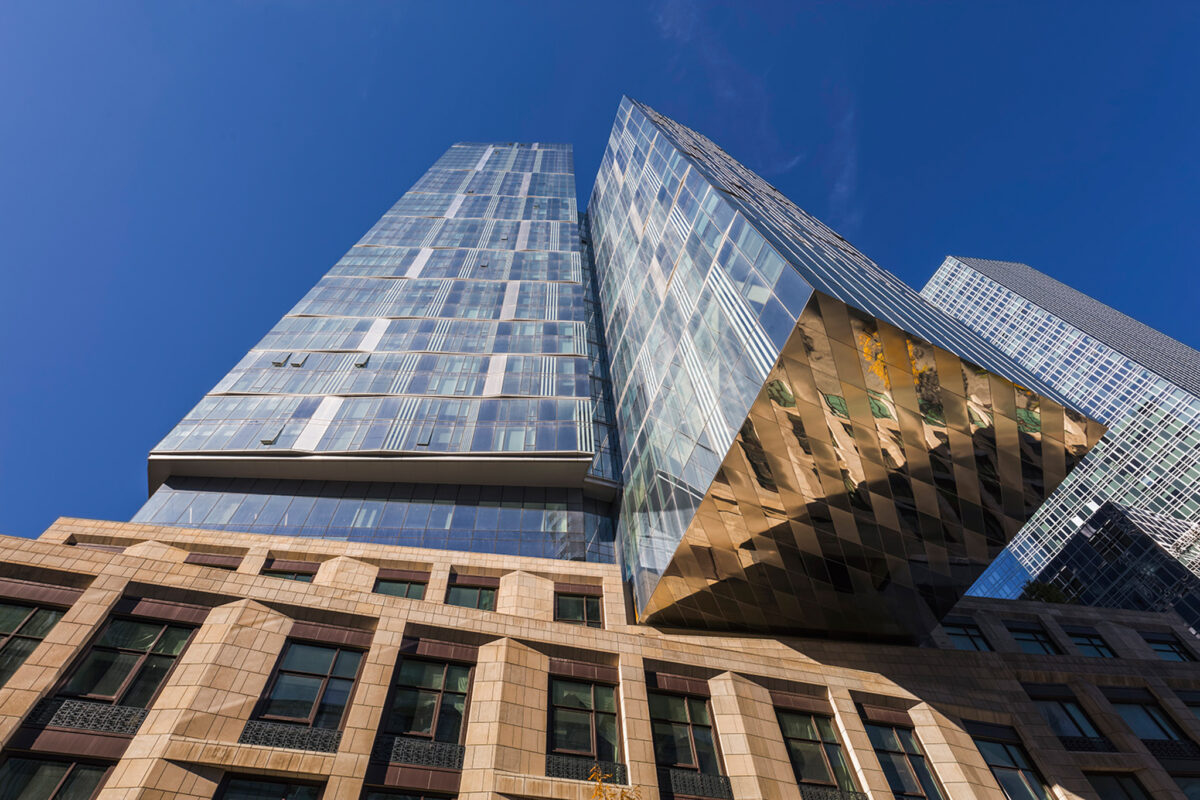
Designed by Pelli Clarke Pelli Architects in collaboration with Hill West, the 42-story building contains 246 condominium residences and occupies an entire city block. Its architecture combines a substantial limestone base with two glass towers, creating a building that feels distinctly contemporary without being disconnected from the architectural character of the Upper West Side.
That’s part of what has allowed One West End to age so well.
It doesn’t feel like a building designed around a trend.
It feels established.
The Apartments Still Deliver
A great amenity package can get someone through the front door.
Ultimately, however, people live in the apartment.
And that’s where One West End continues to make a strong case for itself.
The building’s residences were designed with interiors by Jeffrey Beers, and its larger Tower Residences feature generous layouts, wide-plank hardwood floors, substantial entertaining spaces, floor-to-ceiling windows, and ceiling heights ranging from approximately 10 to 20 feet.
Many residences capture expansive city and Hudson River views, something that becomes particularly valuable on Manhattan’s western edge.
But beyond finishes and views, there is something increasingly important in today’s luxury market: livability.
The layouts feel like homes.
There is space to entertain, space to work, and space for everyday life. For buyers looking beyond the initial visual impact of an apartment and thinking about how they will actually use it, that matters.
35,000 Square Feet of Amenities That People Actually Use
New development has turned amenities into something of an arms race in New York.
One West End was ahead of that curve.
The building offers approximately 35,000 square feet of indoor and outdoor amenities, including a 75-foot swimming pool, fitness center and spa, media and game rooms, children’s spaces, private dining facilities with a chef’s kitchen, and multiple areas designed for gathering and entertaining.
Then there’s the outdoor space.
A 12,000-square-foot landscaped rooftop terrace provides areas for grilling, lounging, entertaining, and simply getting outside without leaving home.
In Manhattan, private residential outdoor space at that scale is meaningful.
But the amenity story at One West End isn’t simply about how many rooms appear on a brochure.
It’s about creating a building where residents can actually live beyond the four walls of their apartment.
Service Makes the Difference
This is one of the areas that can be difficult to understand until you’ve spent real time in a luxury building.
Amenities are physical.
Service is experiential.
One West End combines a 24-hour door attendant and full-time concierge with a dedicated Lifestyle Team. The building has also offered specialized programming and a Children’s Concierge designed to coordinate activities and services for families.
That hospitality component changes the feeling of a building.
Instead of simply providing spaces, the building creates reasons for residents to use them.
And over time, that’s what helps turn a collection of apartments into a community.
The Location Has Only Become More Interesting
When One West End was completed, this section of the Upper West Side was still in the middle of an enormous transformation.
Today, buyers can see the result.
The Riverside Center master plan brought thousands of residences, public open space, retail, and community infrastructure to an area that had once been largely underutilized.
The neighboring Waterline Square development further transformed the waterfront with three architecturally distinct towers, landscaped public space, restaurants, retail, and more than 100,000 square feet of its own lifestyle and recreational amenities.
At the same time, One West End remains connected to everything that makes the broader Upper West Side so desirable.
Lincoln Center, Columbus Circle, Riverside Park, Central Park, cultural institutions, restaurants, and shopping are all within reach.
That creates an unusual balance.
You have the residential character and culture of the Upper West Side, the energy and convenience of Midtown nearby, and the openness of the Hudson River waterfront just outside.
It Offers Something Different From Waterline Square
The arrival of Waterline Square could have made One West End feel like the earlier generation of development in the neighborhood.
Instead, the two complement each other.
Waterline Square is a dramatic three-tower development built around its own park and an enormous shared amenity program. One West End offers a different experience: one established condominium building with its own dedicated suite of amenities and services.
For some buyers, the sheer scale of a development like Waterline Square is exactly what they’re looking for.
Others prefer the feeling of a standalone building.
That’s part of the appeal of One West End. It provides the services and amenities associated with large-scale new development while maintaining its own identity.
Nearly a Decade Later, It Still Competes
Perhaps the best test of a luxury building comes after the marketing campaign ends.
Does the architecture still feel current?
Do the residences still compete with newer inventory?
Are the amenities useful?
Has the surrounding neighborhood improved?
Would buyers who have an entire city of options still put the building on their list?
At One West End, the answer to those questions continues to be yes.
Current asking inventory spans a broad range of residence sizes and price points, from one- and two-bedroom homes to expansive multi-bedroom residences commanding several million dollars.
That breadth is another strength. One West End isn’t built around only one type of luxury buyer.
It can work for someone looking for a Manhattan pied-à-terre, a couple needing more space, a growing family, or a buyer looking for a substantial Upper West Side residence.
What Makes a Building Last?
New York will always build something newer.
There will always be another tower with another amenity, another designer, and another promise of a completely new way to live.
But great real estate isn’t only about novelty.
It’s about whether a building continues to make sense.
One West End does.
The architecture remains distinctive. The residences are substantial and livable. The amenity package is extensive without feeling like an afterthought. The service creates community. And the neighborhood around it has continued to mature.
That’s why, nearly a decade after opening, One West End doesn’t feel like yesterday’s new development.
It feels like a building that has found its place in New York.
And for buyers looking for modern luxury on the Upper West Side, One West End still deserves to be part of the conversation.
At The Garson Team, One West End is more than a building we follow. It’s a market we know intimately. From individual residence values and layouts to current inventory and the nuances that distinguish one line from another, we understand what makes this building unique.
If you’re considering buying or selling at One West End, we’d be happy to talk about what today’s market means for your residence.