

How Robert Moses Built the New York You Know Today
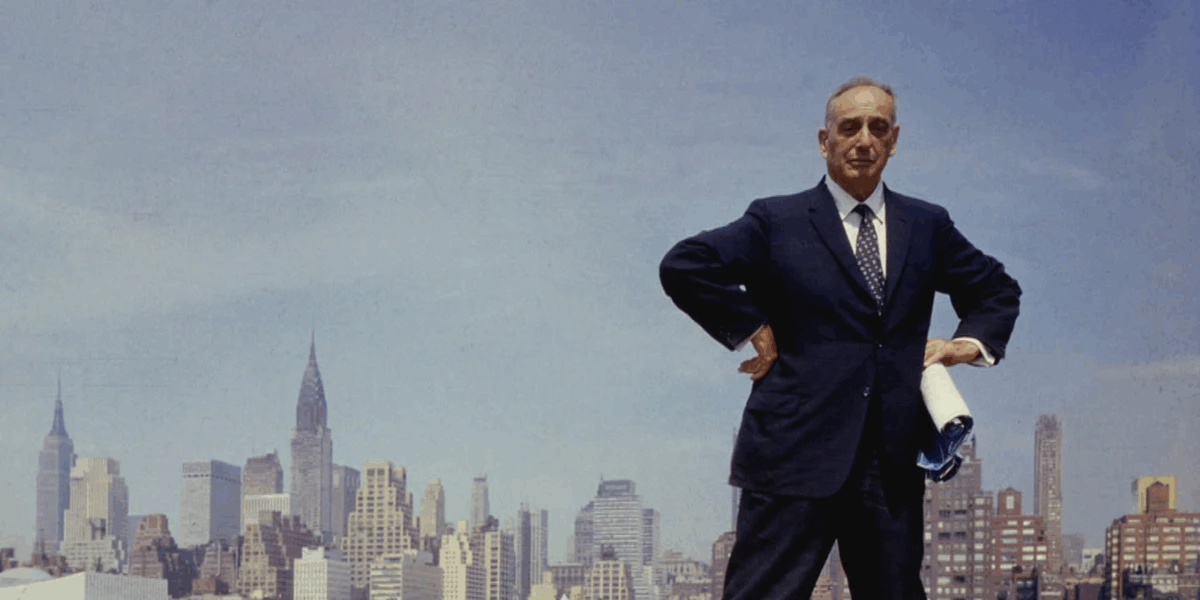
Once You Read The Power Broker, You Never Walk Through New York the Same Way Again
There’s a moment when reading Robert Caro’s The Power Broker when you realize you’ve been living inside Robert Moses’s version of New York your entire life—you just never knew his name.
Every time you sit in traffic on the Cross Bronx Expressway, cross the Triborough Bridge, or spend a summer day at Jones Beach, you’re experiencing Moses’s New York. The city’s highways, parks, bridges, and even neighborhood boundaries were shaped by one unelected man who wielded more influence than most mayors and governors combined.
Understanding Robert Moses isn’t just history—it’s the key to understanding how New York City real estate, neighborhoods, and infrastructure work today. For The Garson Team, knowing this story helps us guide buyers, sellers, and investors through the living, evolving organism that is New York City.
The Master Builder Who Reshaped New York City
From the 1920s through the 1960s, Robert Moses led the most dramatic transformation of any city in American history. The numbers are staggering: 13 bridges, 416 miles of parkways, 658 playgrounds, and millions of acres of parkland.
Moses wasn’t just a builder—he was a political engineer. Through independent “authorities” like the Triborough Bridge and Tunnel Authority, he sidestepped city councils and mayors. Funded by tolls and bonds, he built at a scale no modern planner could match.
Governors like Al Smith and mayors like Fiorello LaGuardia gave him free rein because he got things done. His vision was clear: modernize for the automobile age. Build expressways, expand park access, and replace “slums” with highways and towers.
His imprint remains everywhere—from the United Nations headquarters and Lincoln Center to Stuyvesant Town, Shea Stadium, and the arterial web of expressways that defines New York’s movement and identity.
Power and Politics: Then vs. Now
Robert Moses’s reign represents the extreme of centralized power.
He made decisions without community input or environmental review. If he wanted to bulldoze a neighborhood—and he did—there was no stopping him.
Today’s New York is almost the opposite. Modern development follows the Uniform Land Use Review Procedure (ULURP), requiring public hearings, environmental impact studies, and City Council approval. Community boards and local voices now play a crucial role in shaping city planning.
It’s slower, messier, and far more democratic.
But it raises an enduring question: How do we build boldly without repeating the mistakes of Moses’s era?
The Lasting Impact on New York Neighborhoods
Moses’s highways didn’t just move cars—they divided communities.
The Cross Bronx Expressway destroyed thriving South Bronx neighborhoods in the 1950s, displacing thousands of working-class families. The effects—disinvestment, poverty, and urban decline—still echo today.
Even the bridges to Jones Beach, deliberately designed with low clearances to block buses, reveal his bias toward wealthier, car-owning visitors.
Public housing projects he sited near highways became isolated enclaves, shaping the social and economic geography of the city.
These choices still define New York real estate patterns, commute times, school districts, and property values. Every map of NYC’s infrastructure still traces the outlines of Robert Moses’s power.
The New Builders: Reimagining the City
Today’s major urban projects reflect a complete rejection of Moses’s car-first mindset.
- The High Line transformed an abandoned elevated rail line into a pedestrian park and urban oasis—an emblem of adaptive reuse and community-driven design.
- Hudson Yards and the Hudson River Park expansion show how development now integrates sustainability, cultural space, and public engagement.
- Governors Island’s redevelopment prioritizes climate resilience and green space.
- The Brooklyn-Queens Expressway (BQE) redesign asks whether a divisive highway can be reimagined to reconnect neighborhoods.
- The East Side Coastal Resiliency project protects Manhattan’s waterfront while expanding public parks and access.
These initiatives take longer and cost more than Moses’s projects—but they embody modern New York values: sustainability, equity, and community participation.
Why This Matters for Real Estate
For anyone navigating New York City real estate, understanding Robert Moses’s legacy is practical knowledge.
His highways still determine commute times. His parks shape neighborhood desirability. His urban renewal projects influence where value—and opportunity—exists today.
At The Garson Team, we connect historical context with today’s market trends. We help clients understand why some neighborhoods are rising, why others feel disconnected, and how city planning continues to shape property values and development potential.
Whether you’re buying, selling, or investing, knowing how Moses’s vision and today’s planning policies interact gives you an edge in understanding New York’s ever-evolving landscape.
The City Never Stops Building
Robert Moses proved how one person could reshape an entire metropolis. But his legacy also showed the dangers of unchecked power.
Modern New York aims to build differently—through collaboration, inclusion, and environmental responsibility. Yet the core tension remains: how to balance ambition with accountability.
New York never stops building, never stops debating how to build, and never stops reinventing itself. Understanding that cycle—from Moses to the modern era—makes you more than a resident. It makes you a true New Yorker.
And when it comes to real estate in New York City, that understanding isn’t just history—it’s strategy.